
Modified atmosphere packaging for fresh produce can support long export routes. It is not the default for every fruit. The package must balance produce respiration, film permeability, temperature, and transit time. Vented packaging is often safer when rapid cooling matters or route conditions vary.
The right export fruit packaging depends on the commodity and the complete route. For fruit packaging for sea freight, the produce respiration rate and the actual cold-chain profile matter more than regional habits.
Quick Answer
Use MAP only when tests show that a defined gas balance solves a measured shelf-life problem. The cold chain must also hold the required temperature. Use vented fruit packaging when fast heat removal, simple handling, and tolerance to temperature variation matter more. Test the filled commercial pack before launch.
How Modified Atmosphere Packaging Works
Fresh produce continues to respire after harvest. It takes in oxygen (O2) and releases carbon dioxide (CO2), heat, and water vapor. A sealed film, box liner, pallet cover, or controlled atmosphere shipping system changes how quickly those gases move. The final atmosphere depends on fruit weight, film area, cold-chain temperature, and the produce respiration rate.
Film permeability means how quickly a film lets gases pass through it. Perforations add another path for gas exchange. Excessive exchange may provide little benefit. Too little oxygen can cause fermentation and off-flavors. Too much carbon dioxide can injure sensitive fruit. A high-barrier film is therefore not automatically a better MAP film.
Match the Atmosphere to the Commodity
Fruit and vegetables do not all respond in the same way. Different types of fruit have a wide range of respiration patterns. Berries and some fresh-cut products are high respiring, while other whole fruit changes more slowly. Products with high respiration rates can consume oxygen quickly if the film and temperature do not match the load.
Ethylene gas also affects many fresh fruits and vegetables. Ethylene production and sensitivity can change during ripening processes. Packers should therefore use commodity data as a starting point, then test the chosen variety, maturity, fill weight, and route. The goal is an extended shelf life with acceptable flavor and texture, not the lowest possible oxygen reading.
Teams that harvest fruits and vegetables should cool them promptly and avoid mixed loads with conflicting temperature or ethylene needs. MAP may help with extending the shelf life, but it cannot correct delayed cooling, bruising, decay, or poor sanitation.
Where MAP Fits South American Export Routes
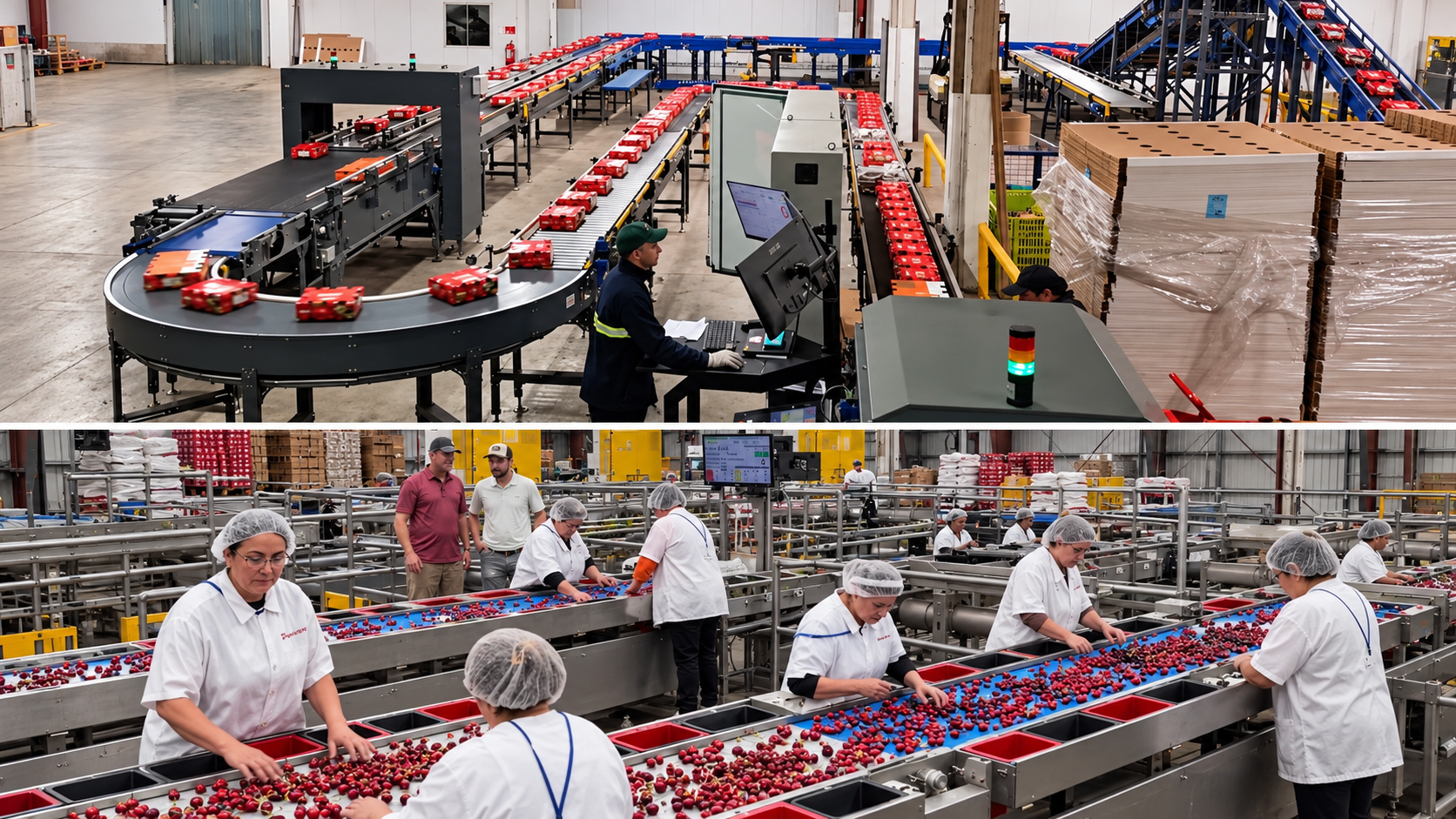
South American exporters often serve distant markets by sea. Selected berries, cherries, avocados, and other high-value fruit may benefit when the route is long and temperature stays stable. Packers can manage gases inside a retail pack, carton liner, pallet cover, or reefer container. Each format needs its own test.
UC Davis describes box-level MAP for cherries and whole-pallet covers for strawberry shipment. Its table-grape guidance says that controlled-atmosphere benefits can be slight. These examples show why one export method cannot fit every crop. They also show why route length alone does not justify a sealed pack.
Where MAP Fits Middle Eastern Markets
Middle Eastern supply chains include local production and imported fruit. MAP has clear uses for fresh dates, fresh-cut food products, and selected premium fruit with longer distribution periods. Saudi researchers reported benefits for fresh dates under defined gas mixtures and refrigerated storage. Do not apply that result to every whole-fruit pack.
For fast-moving whole fruit, a vented punnet, clamshell, bag, or tray may be easier to cool and handle. Warm loading or repeated temperature breaks can change respiration. The change may upset a package designed for one stable temperature.
Control Temperature Moisture and Food Safety
Temperature control remains the first requirement. A small rise in temperature can increase respiration and change the package atmosphere. Log product temperature in real time during trials and verify the warmest points in the load. Do not rely only on the reefer set point.
Condensation also matters. Fruit releases water vapor, and moisture may collect when film temperature falls below the dew point. Wet surfaces can weaken labels, block visibility, and support decay. Vent design, absorbent pads, and stable cooling can help, but each change can also alter gas movement.
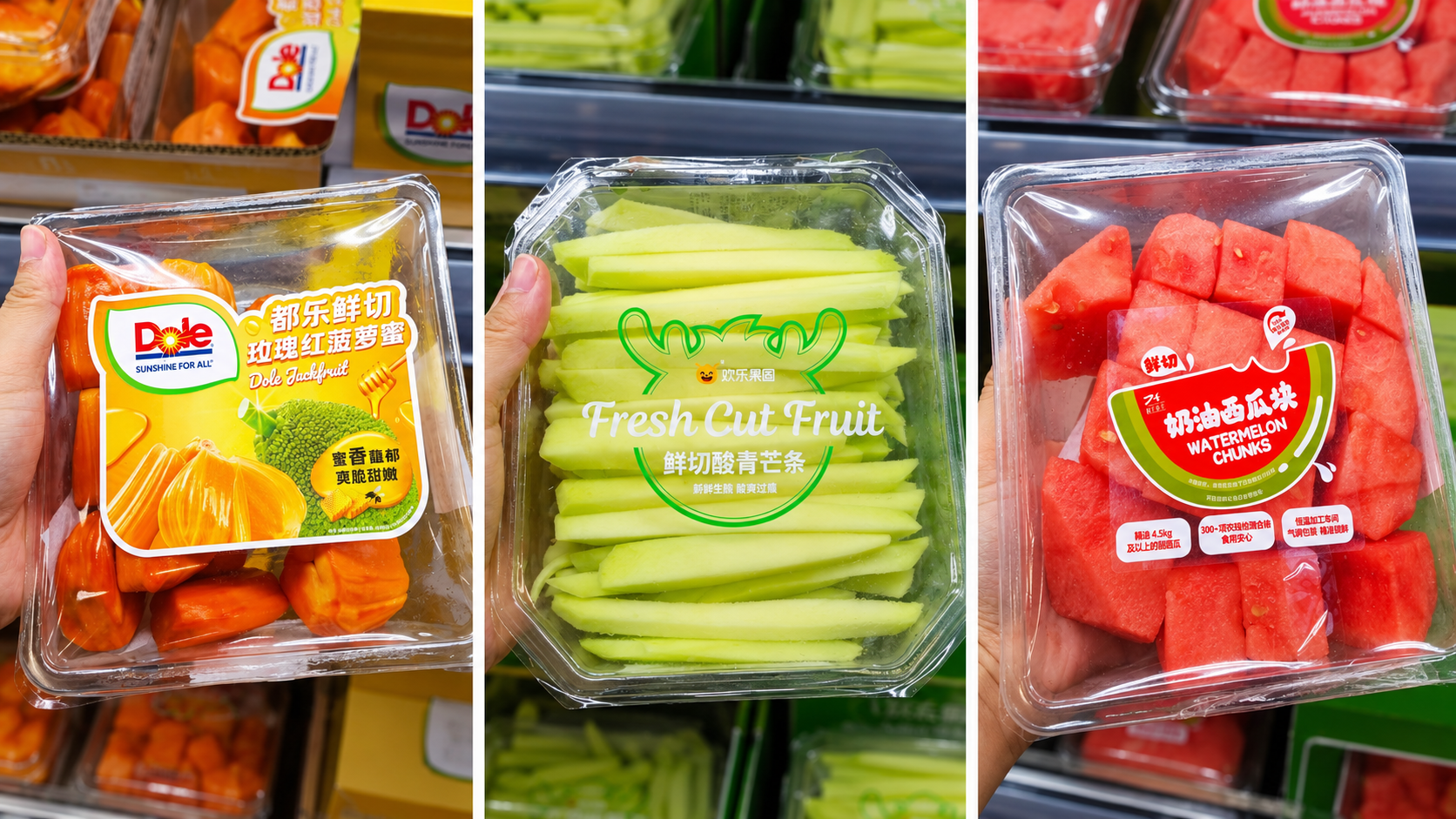
For fresh-cut products, include food safety specialists in the validation plan. MAP may help preserve high quality, but it does not make unsafe food safe. Sanitation, hygienic cutting, approved storage time, and temperature limits still control the risk.
Choose MAP or Vented Packaging
Scroll sideways to read every column.
| Route Condition | Practical Direction |
|---|---|
| Long stable cold route | Validated MAP liner cover or sealed pack may add value |
| Short route or rapid turnover | Vented packaging usually gives simpler cooling and handling |
| Fresh-cut or high-respiration product | Consider MAP only after gas and microbiological validation |
| Variable temperature or mixed route | Prefer a tolerant vented design unless MAP remains safe across the range |
Validate the Filled Export Pack
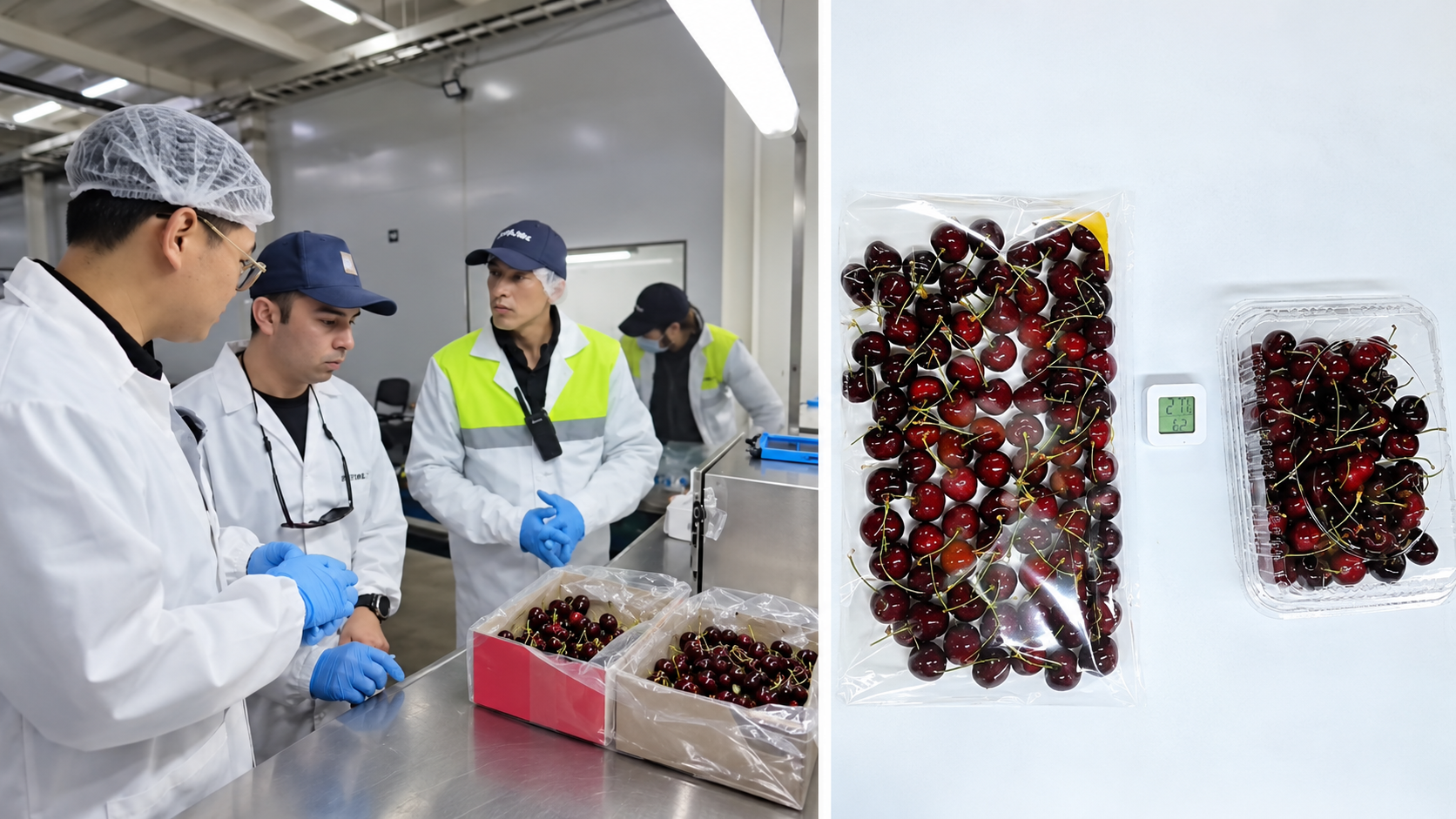
Run shelf life testing with commercial fruit, the final film, normal fill weight, and the planned temperature profile.
- Measure headspace oxygen and carbon dioxide at several points during storage and distribution.
Instrument logs may label these readings as oxygen O2 and carbon dioxide CO2. Keep the same units and sampling method through the trial so results remain easy to compare.
- Record temperature, weight loss, decay, firmness, color, leakage, condensation, flavor, and odor.
- Repeat the trial across normal fruit lots and seasonal respiration changes.
- Compare MAP with the best vented pack under the same route conditions.
Packaging can support quality, but it cannot replace pre-cooling, sanitation, sound fruit, or temperature control. Approve the system only when results remain acceptable at the end of transport and retail display. Record any change in seal quality or perforation size because it can change the gas balance.
Frequently Asked Questions
Is MAP the main retail format in South America and the Middle East?
No universal regional rule applies. MAP is useful in selected export and fresh-cut programs. Vented formats remain practical for many whole-fruit lines.
Is MAP the same as a controlled atmosphere container?
No. MAP usually develops inside a package or liner. A controlled atmosphere system actively manages gases in a container or storage room.
Can a microperforated film create MAP?
Yes. A microperforated film contains very small holes that support controlled gas movement. Hole size and number must match respiration, pack area, fill weight, and temperature. The result still needs gas measurement and shelf-life validation.
When is vented packaging the safer choice?
Choose vents when the pack needs rapid forced-air cooling. They are also a practical choice for short routes, variable temperatures, or fruit without a validated gas target.
Final Decision
The package should solve a defined export problem. Select MAP when testing proves a useful gas balance across the real route. Select vents when cooling speed, easier daily handling, and tolerance to temperature changes offer the stronger result.
