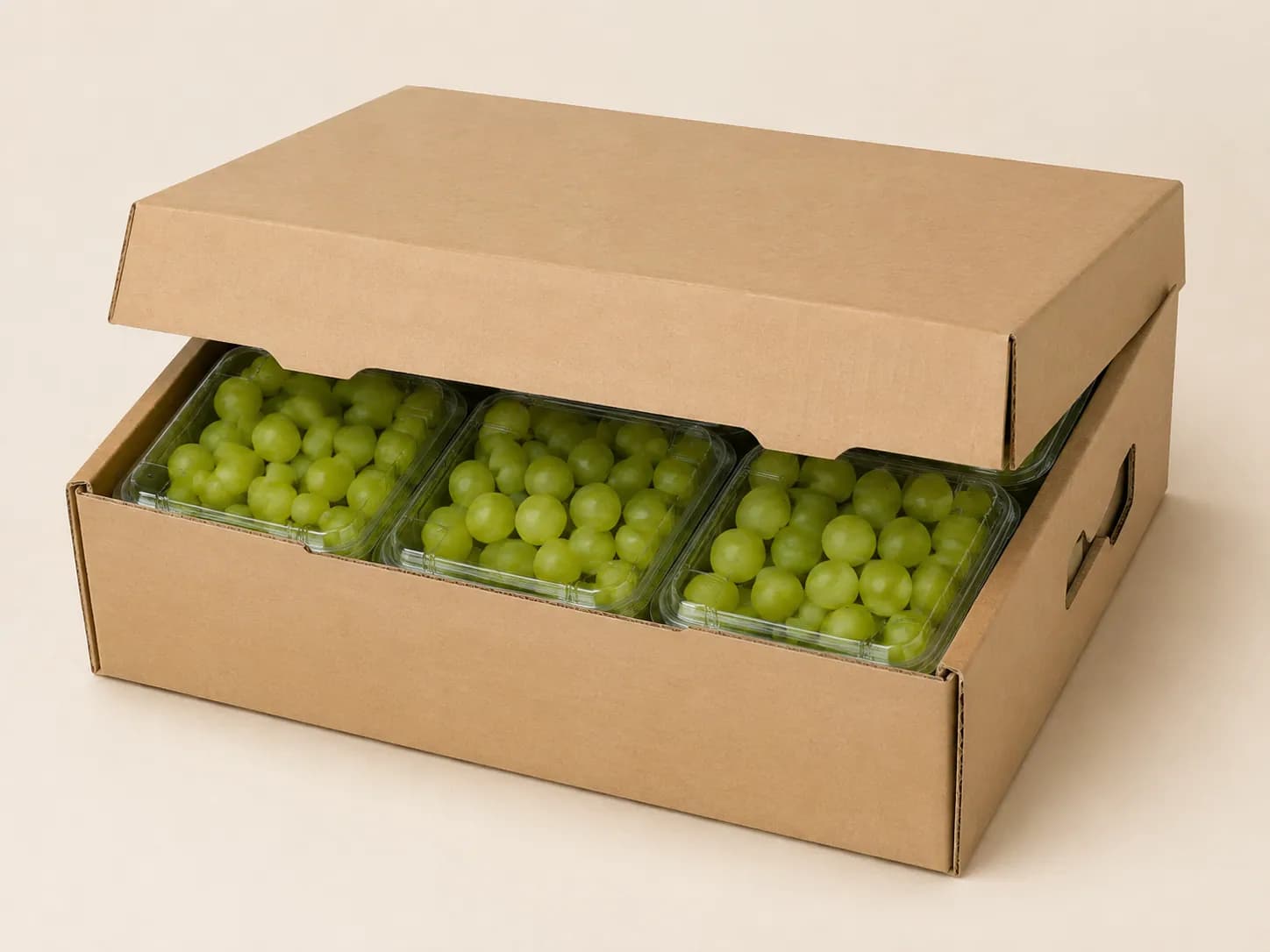
Plan the pack and carton together.

Compare pack orientation, count, clearance and stacking before fixing the outer carton dimensions.
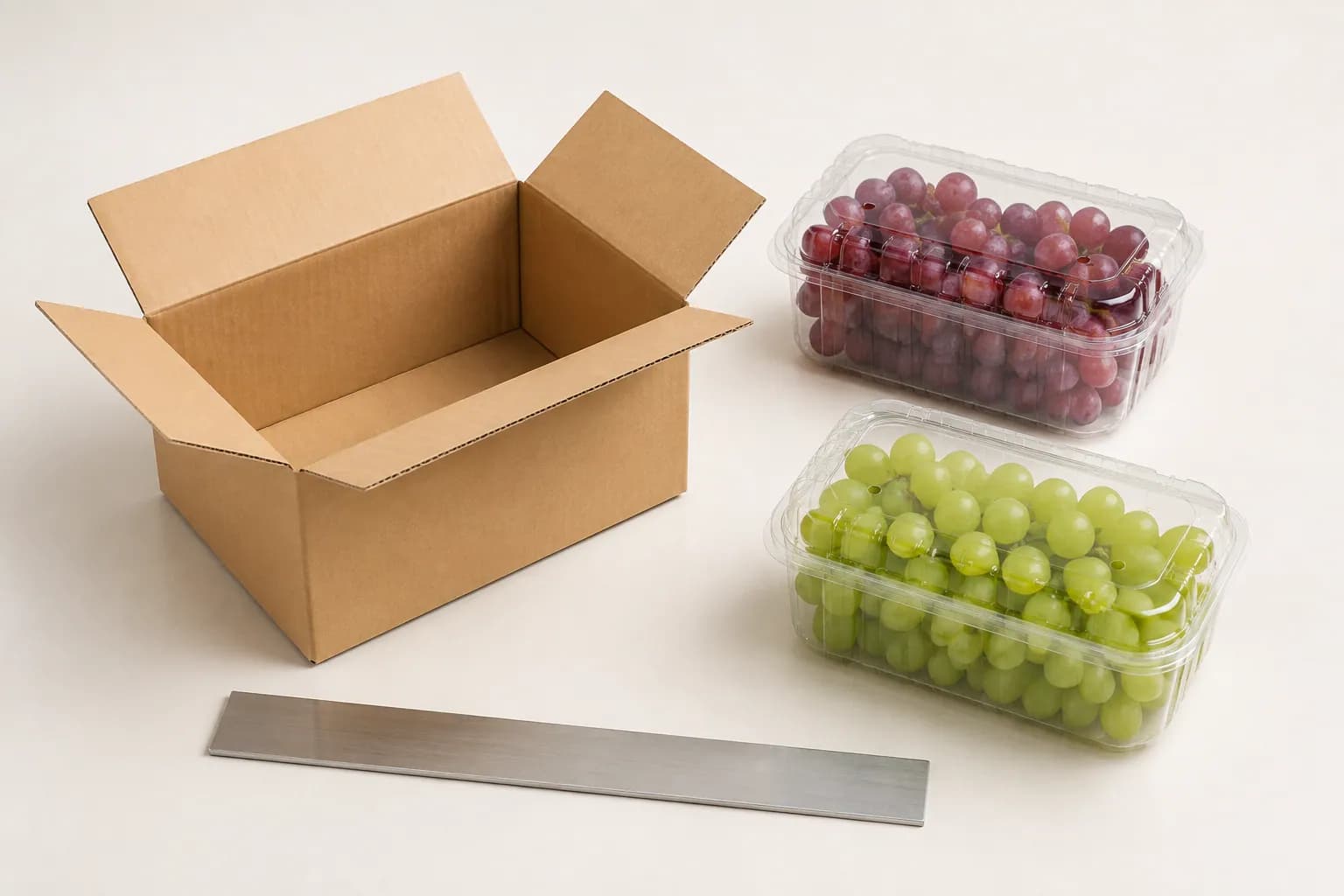
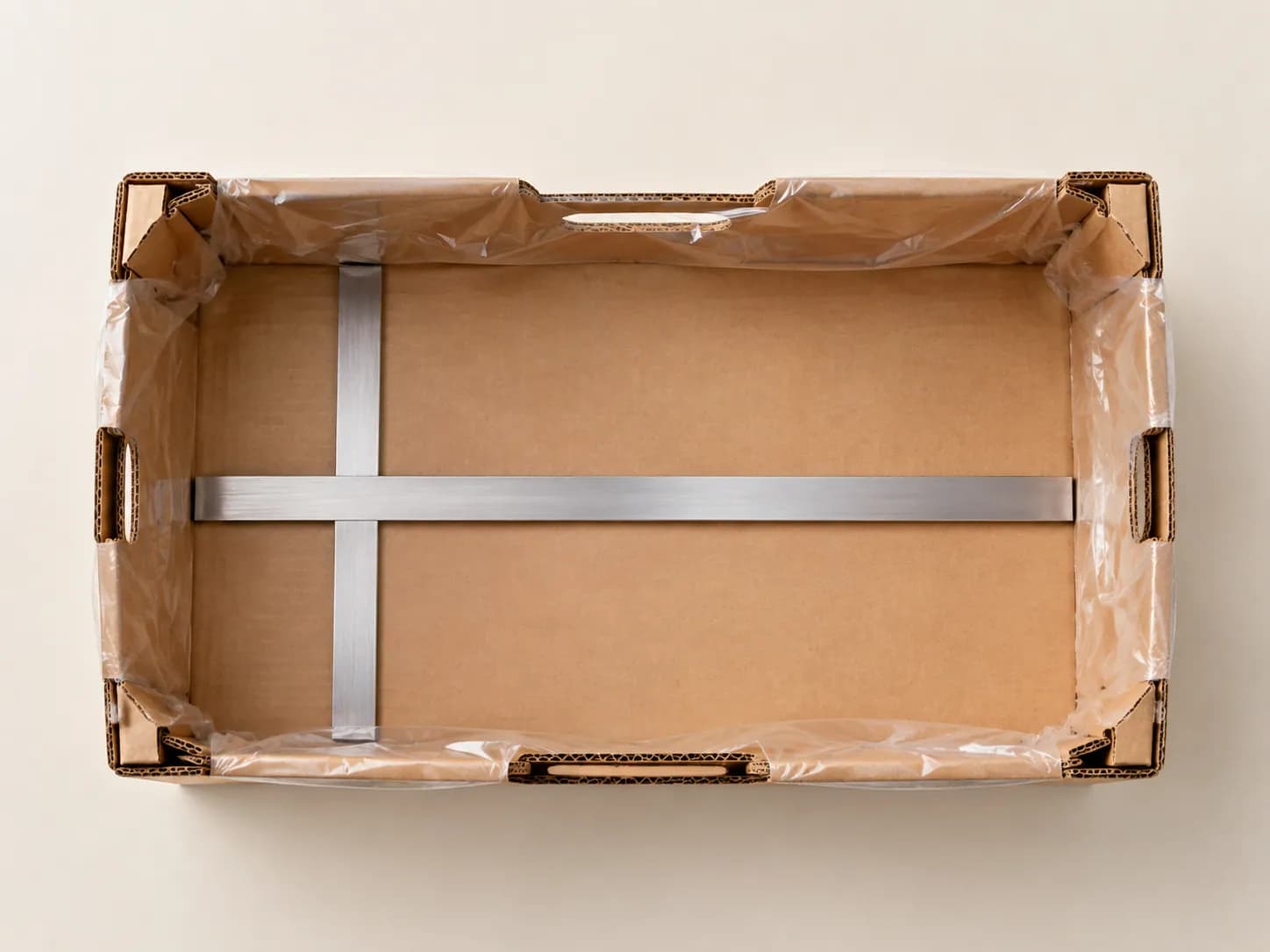
AI packaging illustration: an empty carton, two grape packs and a plain straightedge arranged for dimension review
AI packaging illustration

Start with your current arrangement.

Record closed pack dimensions, carton internal dimensions, count and orientation.

Six dimensions are enough to compare two uniform orientations. Use millimetres.

How to take these measurements
Closed pack
Measure the filled pack, including its lid, rim and widest projecting edges.
Carton interior
Measure the space inside the carton, with length and width on the same base.
Keep for the physical check
Current count, orientation, working clearance and photos can follow. The estimate does not require a complete engineering record.
Closed pack · external dimensions
mm
mm
mm
Carton · internal dimensions
mm
mm
mm

Entries stay in this page only. Download or copy the notes before leaving.

Missing a measurement? Ask a packaging question.

Measure the actual contact surfaces.

Check the filled pack, lid, rim and stacking height, allowing for normal variation.
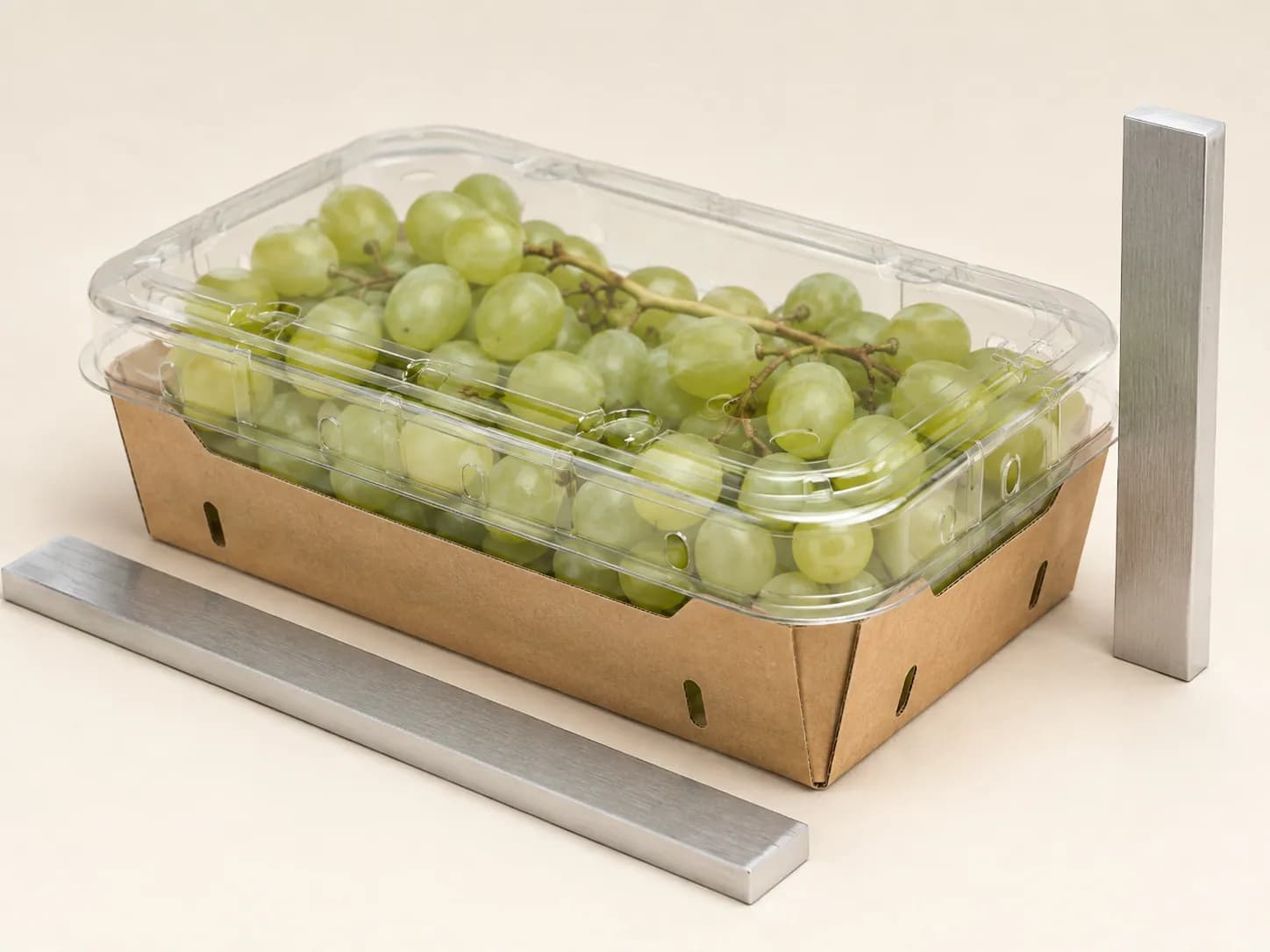
AI packaging illustration: close three-quarter technical still life of one closed filled grape punnet beside two plain metal straightedges, one beside its longest edge and one upright next to the rim
Closed pack measurement surfaces · AI packaging illustration
  • Filled and closed

    Measure the pack in the condition in which it will enter the carton.

  • Lid and rim

    Include the widest projecting edge. Nominal base dimensions can miss the contact point.

  • Stacking height

    Measure the actual filled stack. Nesting, lid movement and compression need a physical review.

Compare possible layouts.

Try orientations and row arrangements with the same pack and carton dimensions.
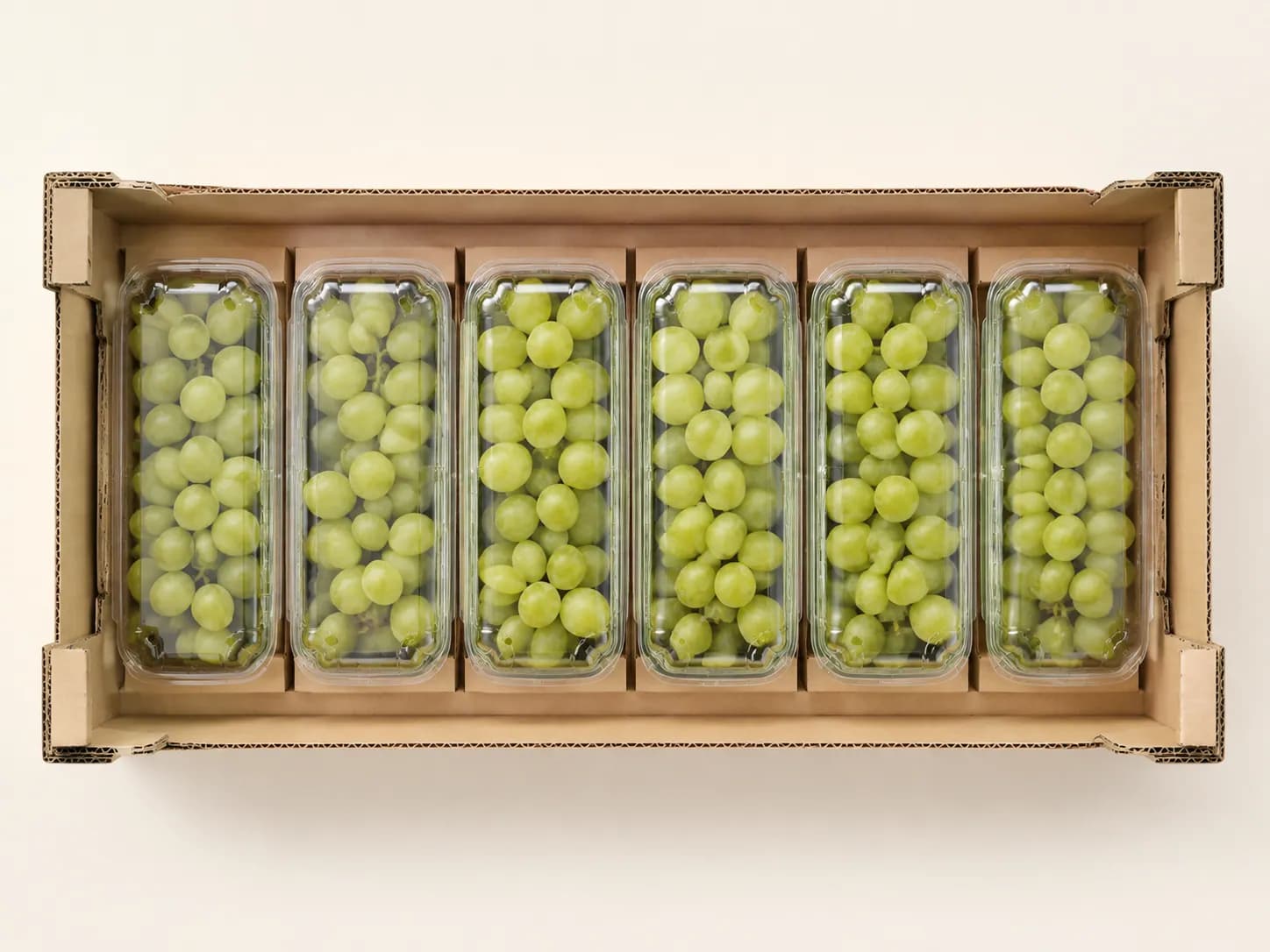
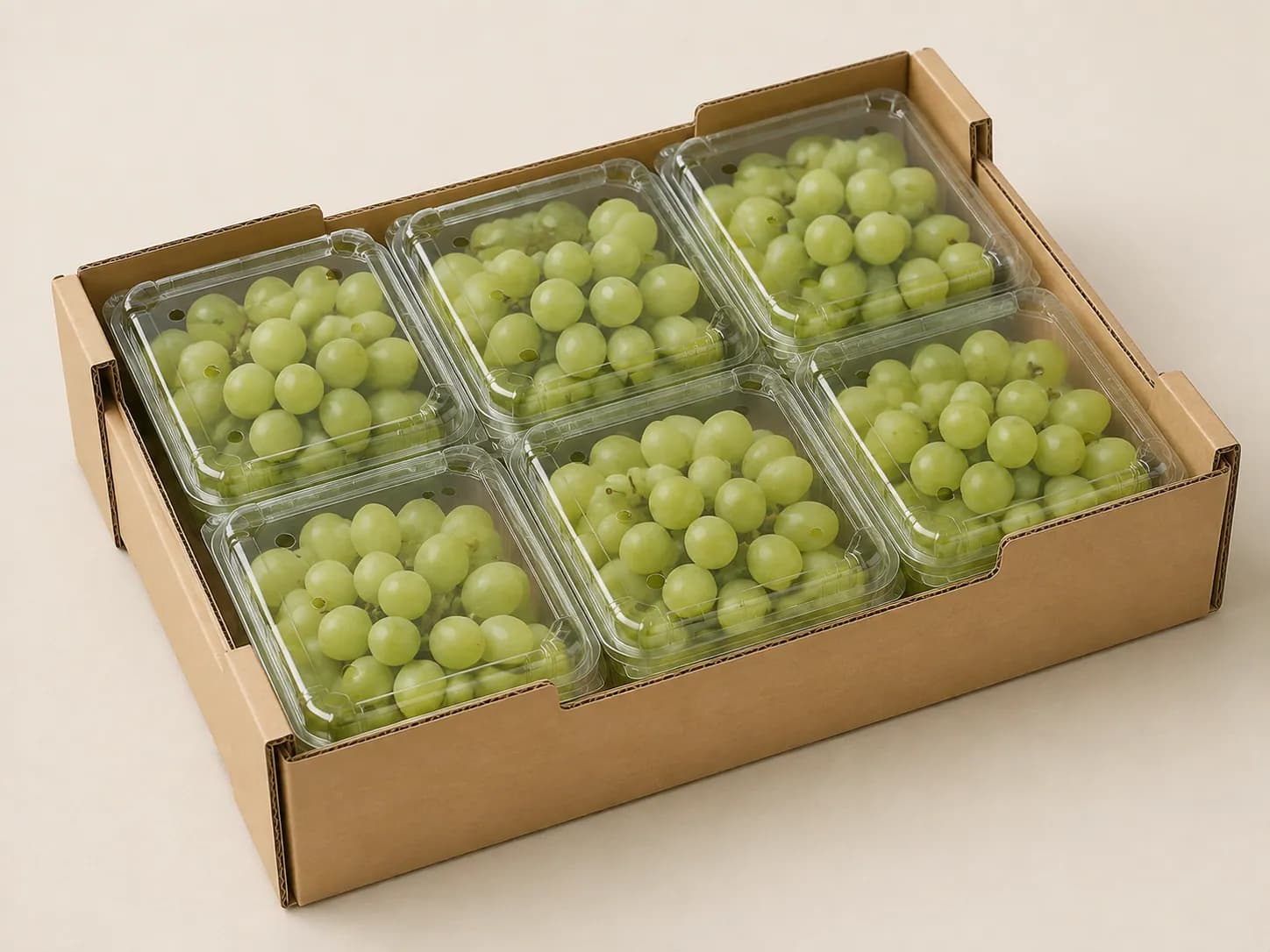
AI packaging illustration: strict top-down view of six rectangular clear grape packs oriented lengthwise in a plain open kraft carton, uniform simple rows, visible narrow gaps, geometric concept only
One uniform orientation · AI packaging illustration
  • Begin with two orientations

    Compare a uniform lengthwise layout and a uniform rotated layout using the same dimensions.

  • Then check the arrangement

    A calculated count leaves out working clearance, mixed layouts and the way the packs behave when filled.

Compare your measurements
Explore measurement and orientation views
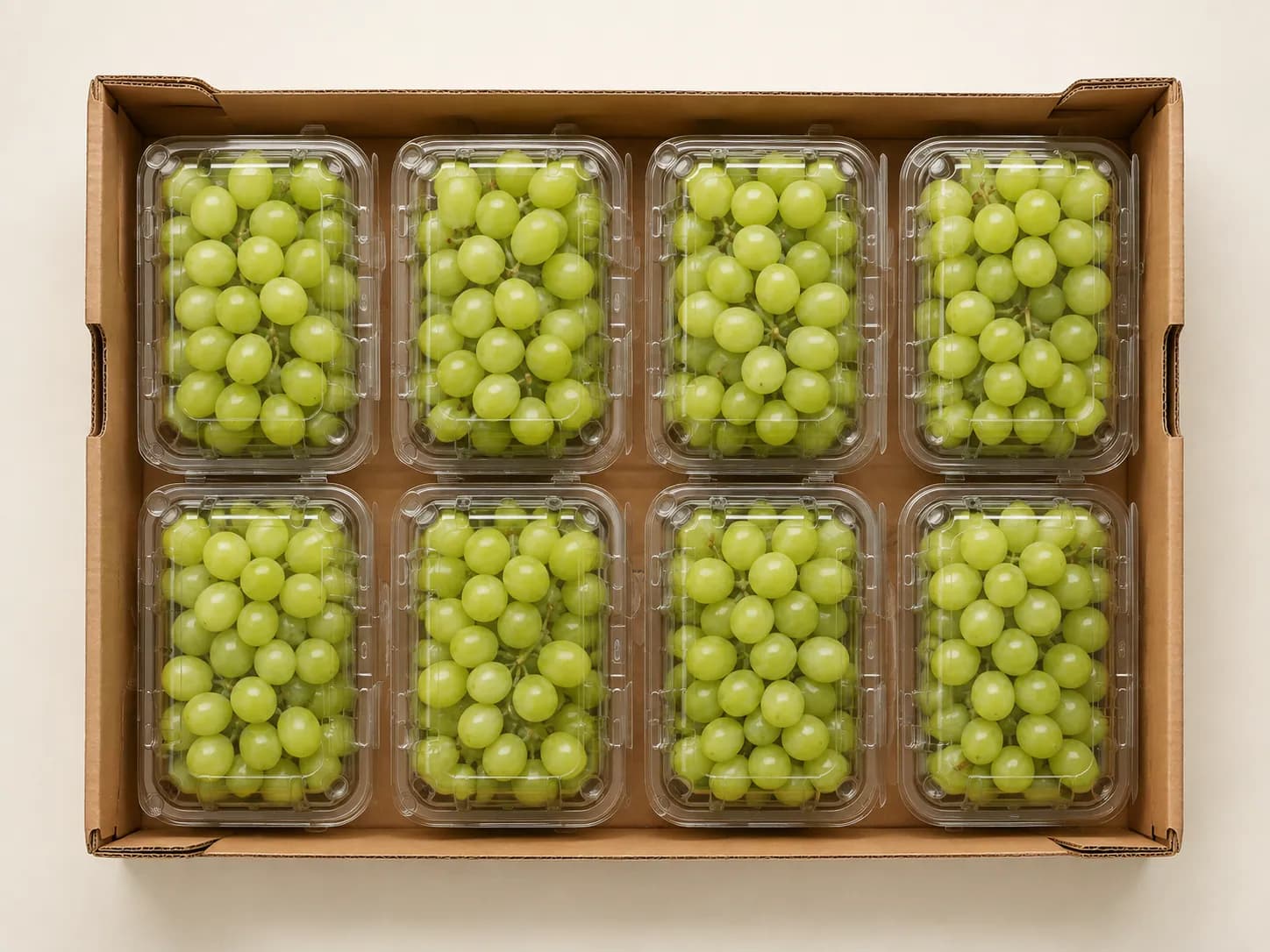
AI packaging illustration: strict top-down view of rectangular clear grape packs all rotated ninety degrees within a plain open kraft carton, uniform same-orientation grid, visible gaps
Rotated orientation · AI packaging illustration
AI packaging illustration: plain empty rectangular kraft carton shown strictly from above with two blank metal straightedges laid along its inner length and inner width
Inside carton measurements · AI packaging illustration
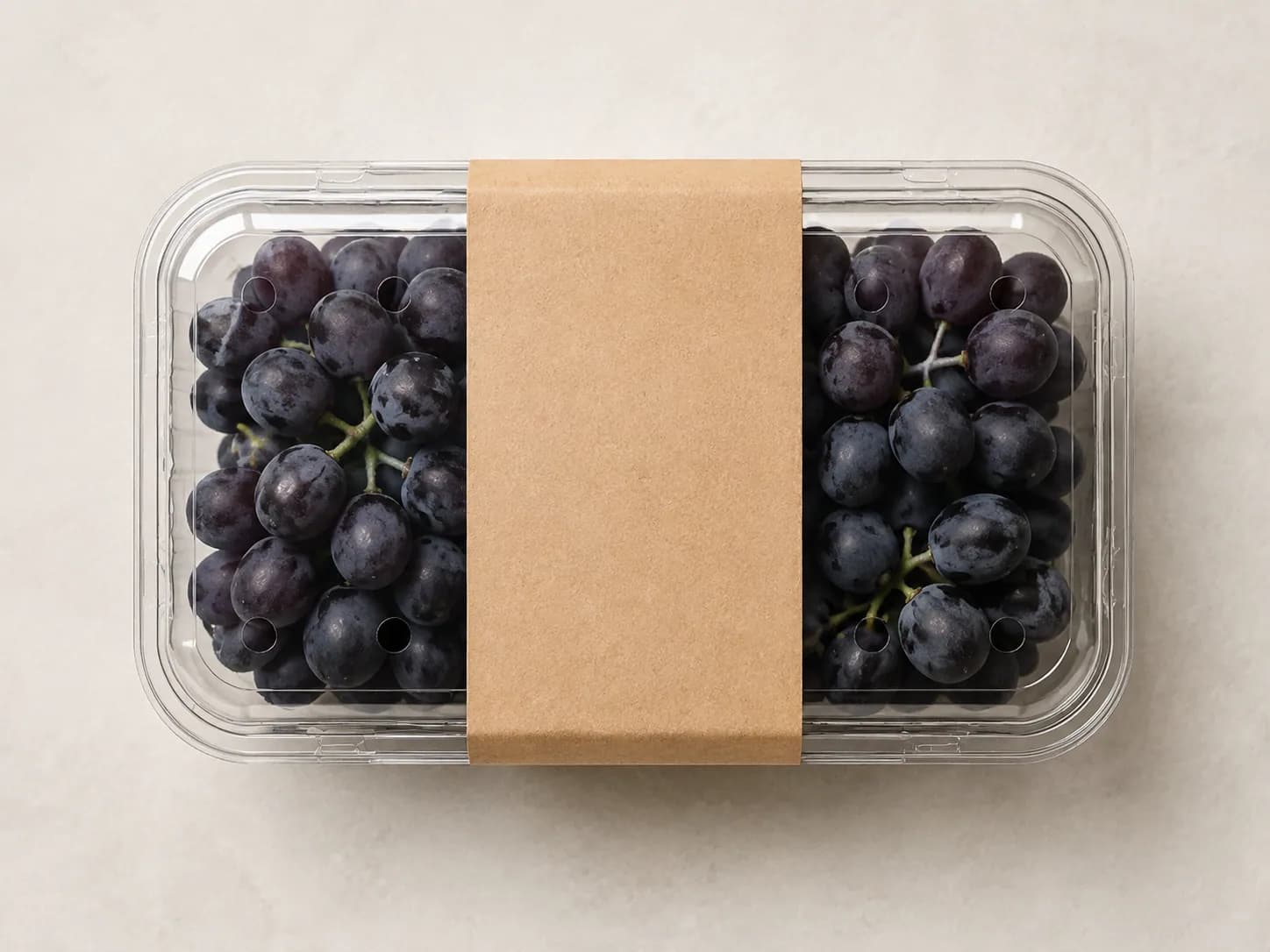
AI packaging illustration: one closed rectangular grape punnet on a neutral surface shown strictly from above with a blank straightedge along its longest outer lid edge
Outer pack measurements · AI packaging illustration
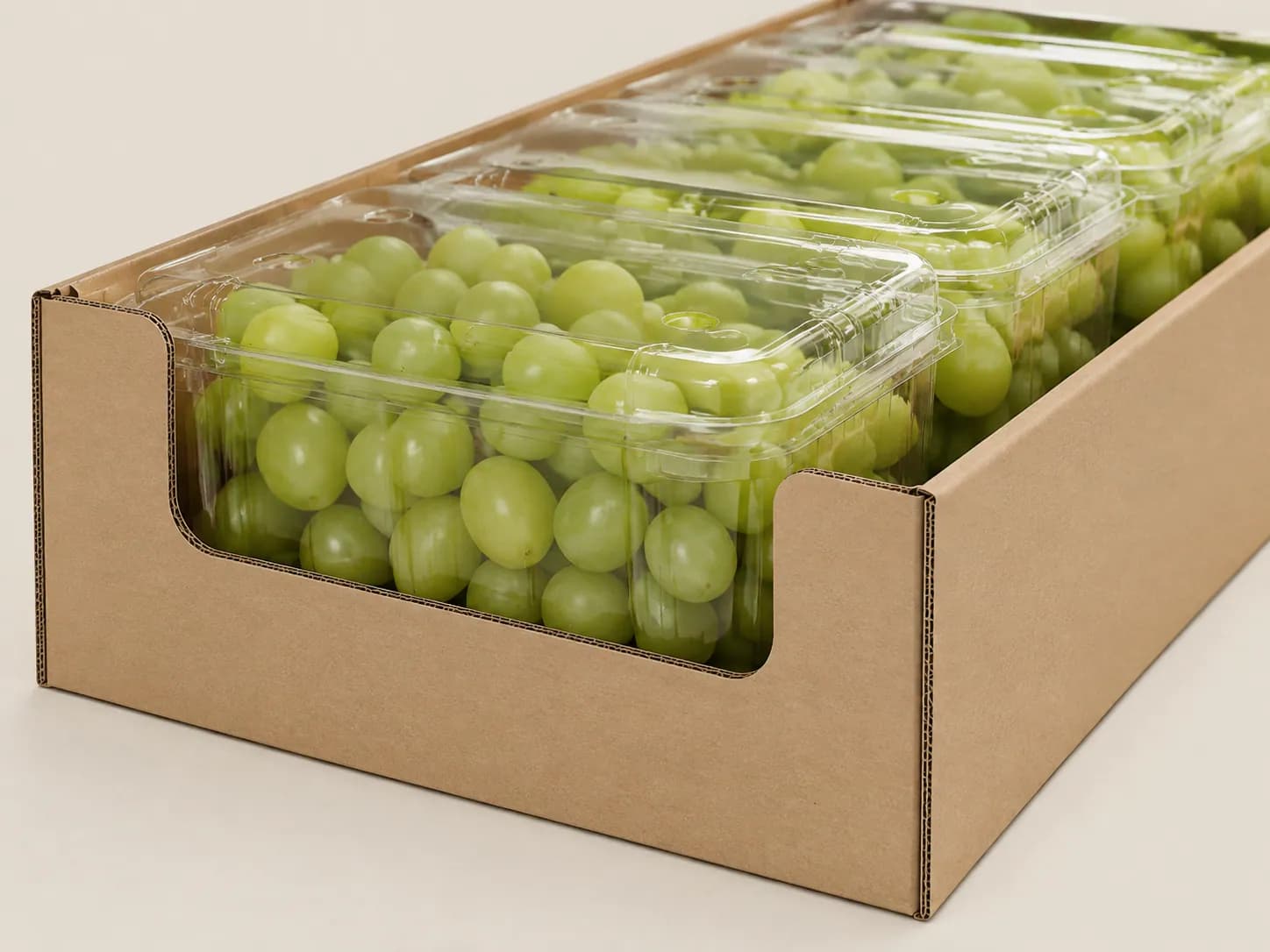
AI packaging illustration: close three-quarter view of a row of identical closed grape punnets oriented lengthwise in an open carton, illustrate the pack-to-carton side contact and gap only
Lengthwise contact · AI packaging illustration
AI packaging illustration: close three-quarter view of identical closed grape punnets oriented crosswise in an open carton, illustrate the different rim alignment and side gaps only
Crosswise contact · AI packaging illustration

Two directions. One set of measurements.

Separate what stays fixed, what changes and what still needs a filled sample.

Basis for comparing two uniform pack orientations
Keep the sameChange for this calculationCheck with a physical sample
Use one filled pack version, its external dimensions and the same internal carton dimensions.Turn the packs by 90°. The calculated count can change; the pack and carton measurements stay fixed.Review working clearance, closure and the filled stack. Agree the actual load and handling conditions before comparing performance.

Check the physical arrangement.

Confirm fit, clearance, closing and handling with filled packs and the real carton.
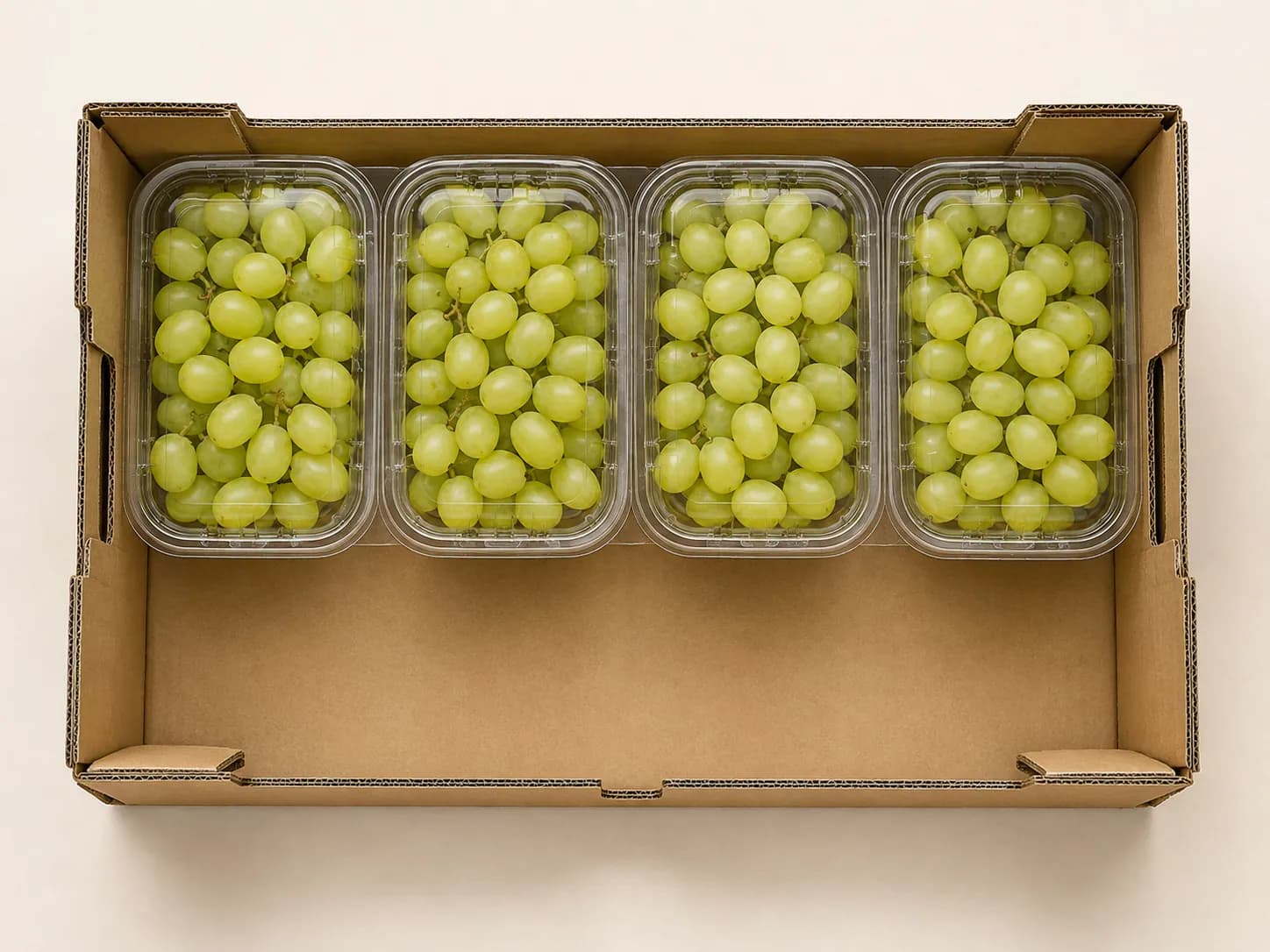
AI packaging illustration: strict top-down view of the first neat row of closed grape punnets in an open plain kraft carton with the remaining empty carton floor visible, actual carton side walls visible
First row · AI packaging illustration
AI packaging illustration: three-quarter view of a plain kraft carton with lid flaps nearly closed above a full layer of grape punnets, show top clearance
Closing clearance · AI packaging illustration
  • First row

    Photograph orientation, spacing and the points where packs meet the carton.

  • Full layer

    Record the completed layer and any gaps or pressure points.

  • Closed carton

    Check top clearance and closure with the intended count before handling.

Create and save your measurement notes

Bring one pack and one carton into the conversation.

Start with a question about fit or packing. If useful, copy the measurement notes above and paste them here. You can ask before every dimension is known.

Contact A BOX

Review and edit your question on the next page. Nothing is sent by this step.0/960

Discuss your pack and carton.

Share dimensions, count and a photo of the current arrangement to start a practical review.

Start a packaging brief