
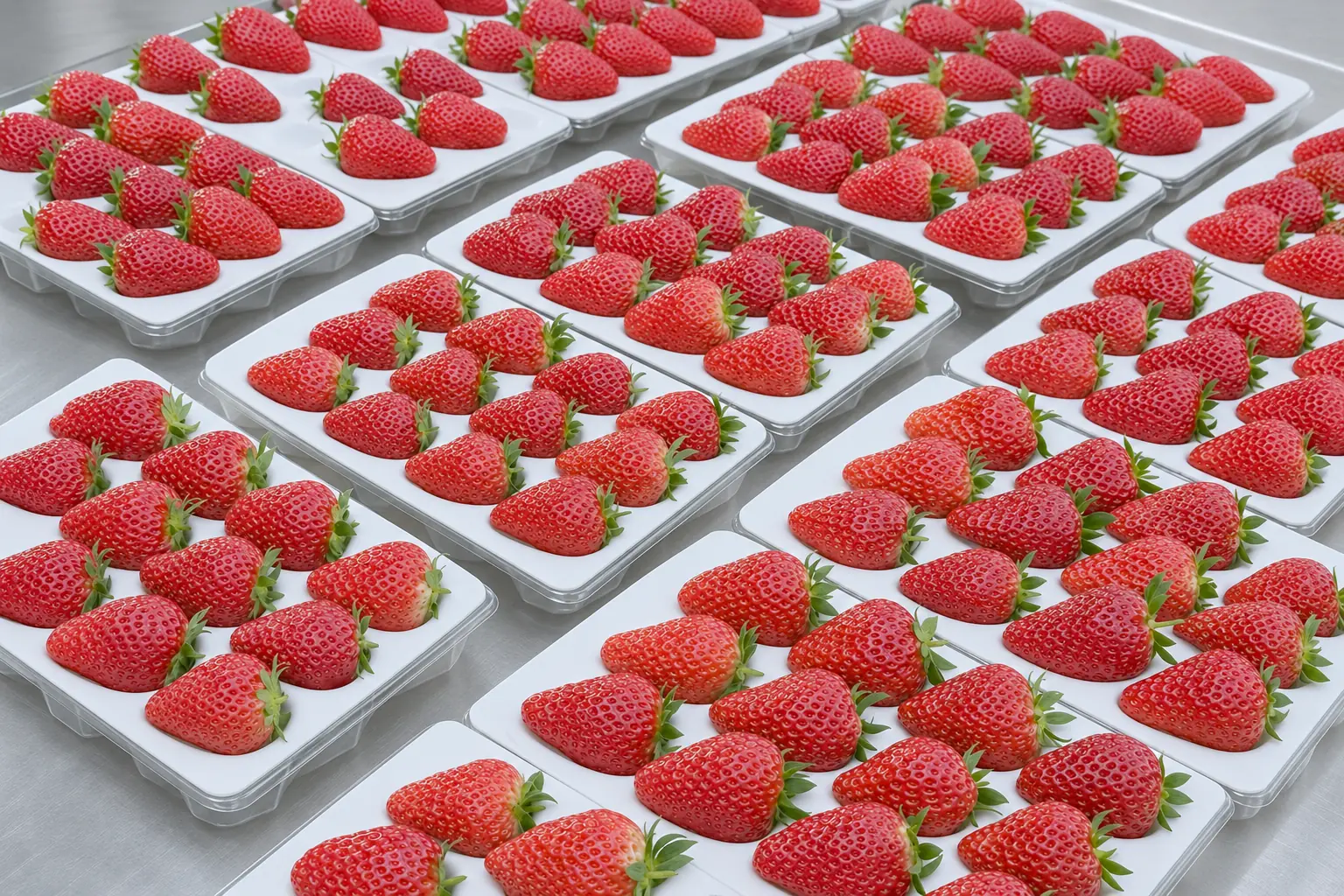
Thermoformed fruit packaging combines plastic trays with paper sleeves or paperboard inserts. It can protect fresh produce, display fruits and vegetables, and carry product details. Both packaging materials must work as one pack across the packing line and supply chain.
Different packaging solutions suit different product types. Fruit clamshell packaging closes as one piece, while thermoformed fruit trays may need a lid or top seal. Clear fruit packaging also needs enough visible area for quality checks.
Quick Answer
Choose the plastic fit first. Test real fruit shapes and sizes, sale weight, headspace, closure, and ventilation holes. Add paper sleeves for fruit packaging only for a defined job. Then validate the complete retail ready fruit packaging system with final artwork, labels, cartons, and handling conditions.
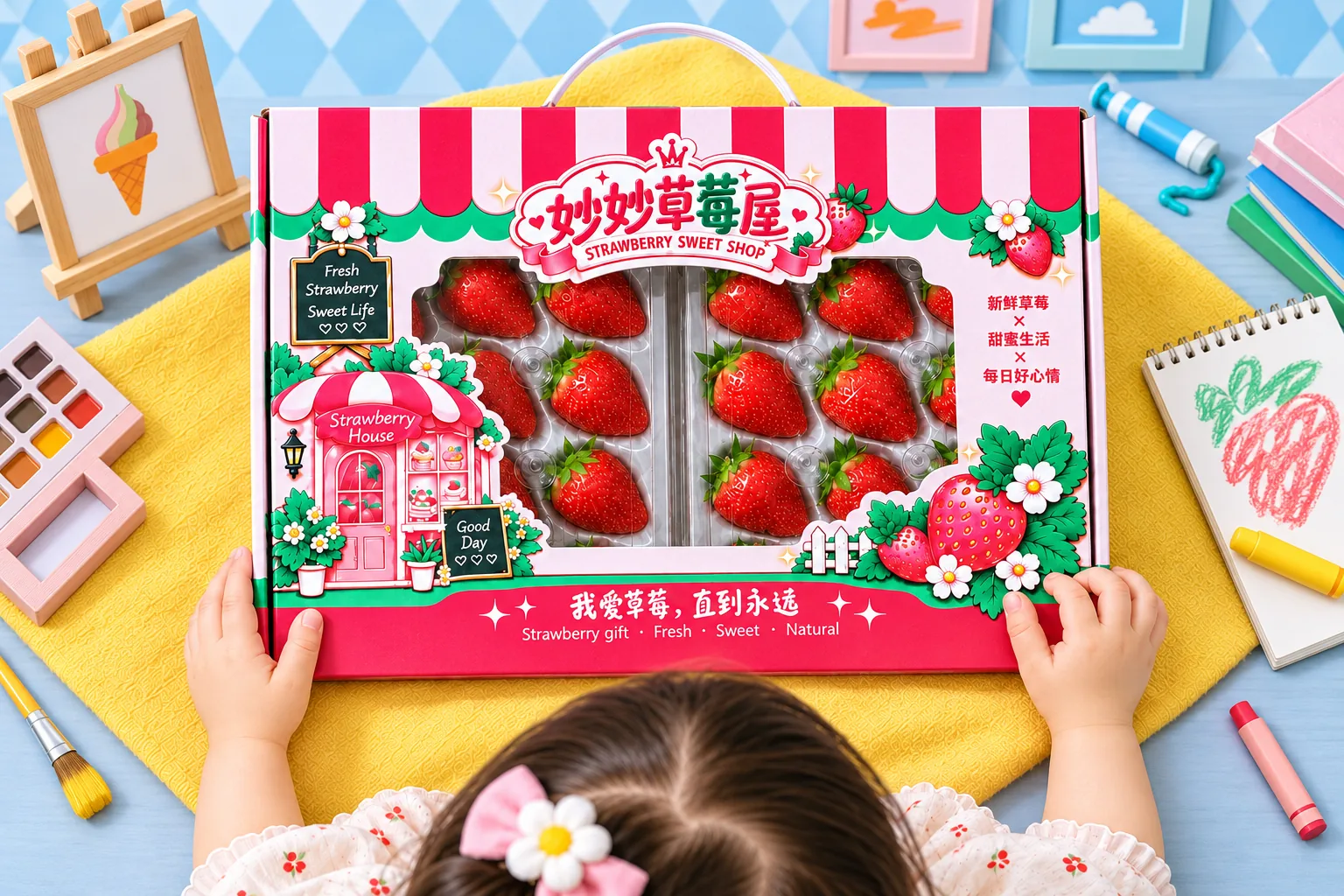
Assign Each Component One Job
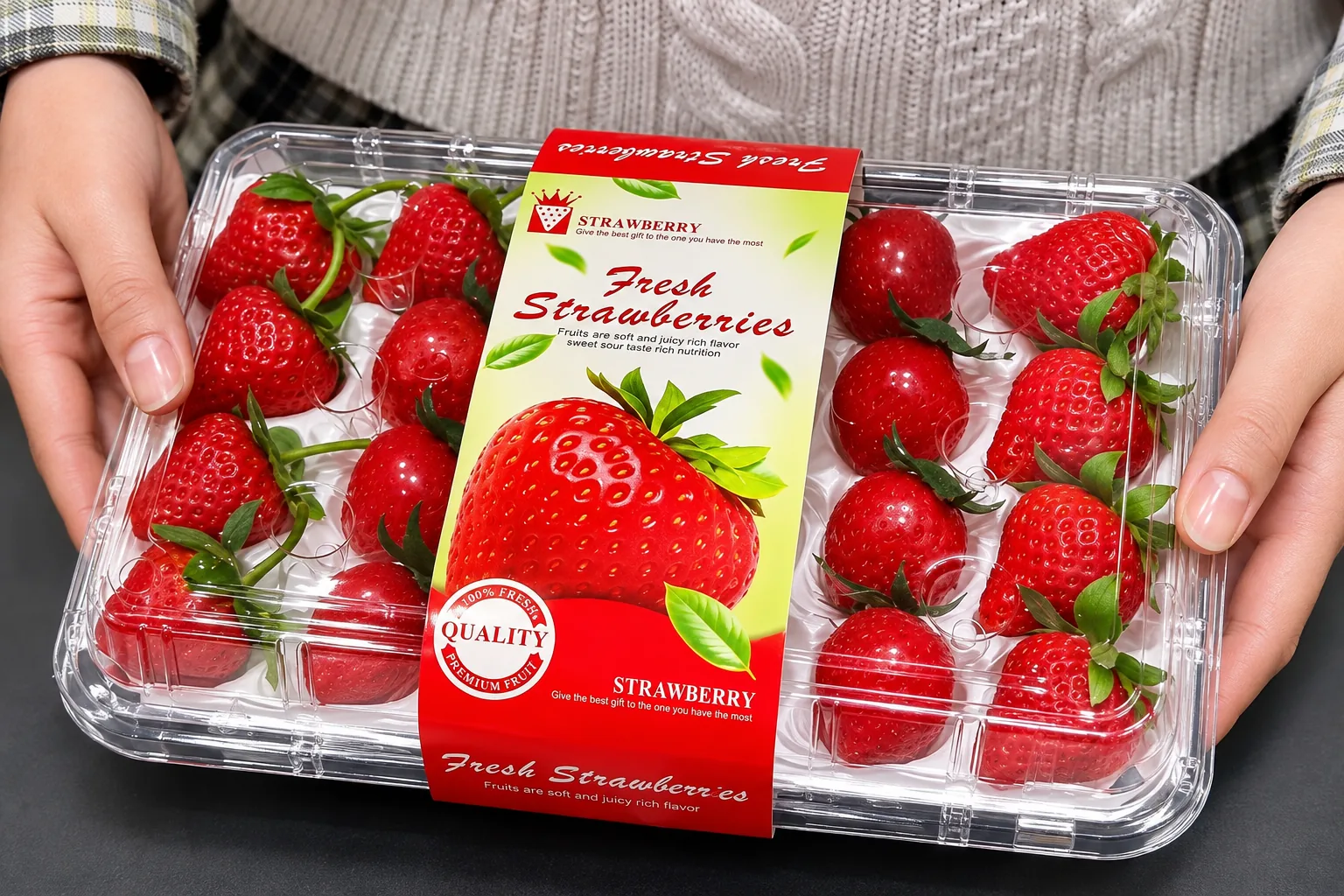
Plastic controls fruit fit, movement, visibility, and closure. Paper carries branding, handling instructions, and required text. A well-designed sleeve should show you accurate product information without hiding the fruit. Paper cannot repair a weak or poorly fitted plastic pack.
Following FAO fresh-produce packaging guidance, review the tray, sleeve, label, shipping case, and pallet as one system. Product protection should match the cooling method and route. Many fruits are fragile, so the pack must limit movement without squeezing them.
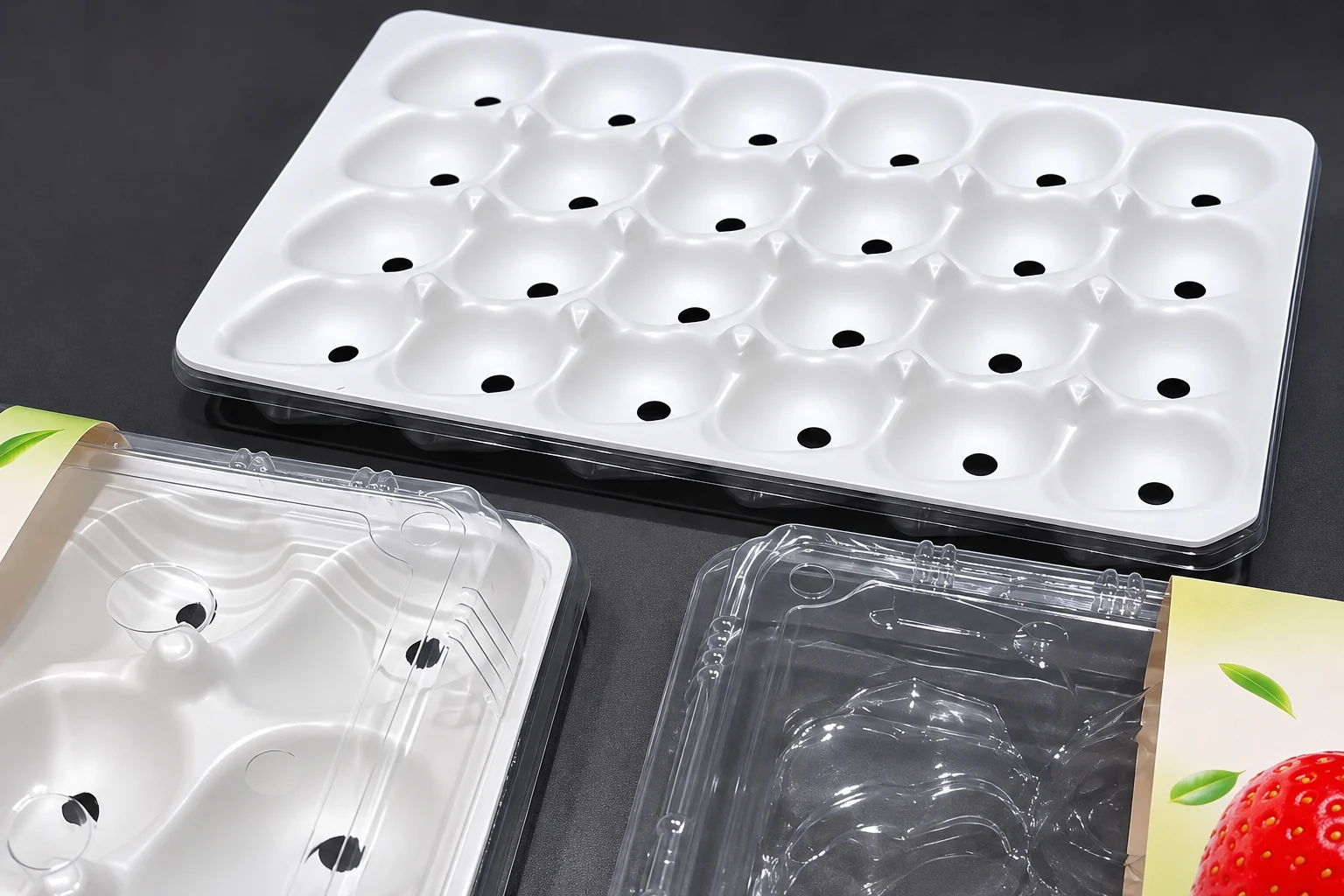
Check Fit Airflow and Claims
Test the smallest and largest fruit in routine supply. A tight cavity can create pressure marks. A loose cavity can allow rubbing. Paper must not cover vents, closure features, barcodes, or the consumer opening path.
Designers should aim to show fruit condition while reserving space for branding. A paper sleeve does not prove that a pack is high quality, eco friendly, or made from a recyclable material. Verify each claim in the target market.
A cost effective hybrid pack uses paper to improve communication, protection, or handling. Compare the total cost with the value added. Then run storage and distribution checks before making long-term performance claims.
Select the Paper Format by Function
When buyers customize packaging, the paper format should solve a defined problem. Paper formats including sleeves, bands, cards, and custom packaging inserts can add full color graphics, origin details, preparation instructions, or a grip area. They should not hide the product window, vents, closure, or tamper features.
Do not confuse retail inserts with custom box inserts used inside corrugated boxes. The retail component supports communication around the thermoformed plastic pack. The shipping component manages case fit and distribution loads. Hybrid packaging solutions work best when drawings define both parts and the clearances between them.
For a custom size, confirm tooling, minimum order quantity, artwork approval, and production lead time before launch. Verify the dieline with production parts because a small change in the tray flange can shift a band, window, barcode, or glue seam.
Control Moisture and Printed Performance
A paper sleeve cannot prevent moisture from forming. Wet fruit, condensation, cold-room humidity, and hydrocooling can soften board, stain full color printing, or weaken glued seams. Test converted paper after conditioning, not only dry samples. Confirm that labels, coatings, inks, and adhesives remain suitable for the intended use.
Packaging can support shelf life only when fruit quality, precooling, sanitation, temperature control, and handling are already managed. Clear areas should let buyers judge color and quality. Do not describe a hybrid pack as eco friendly without evidence for the final materials, separation steps, collection system, and destination market.
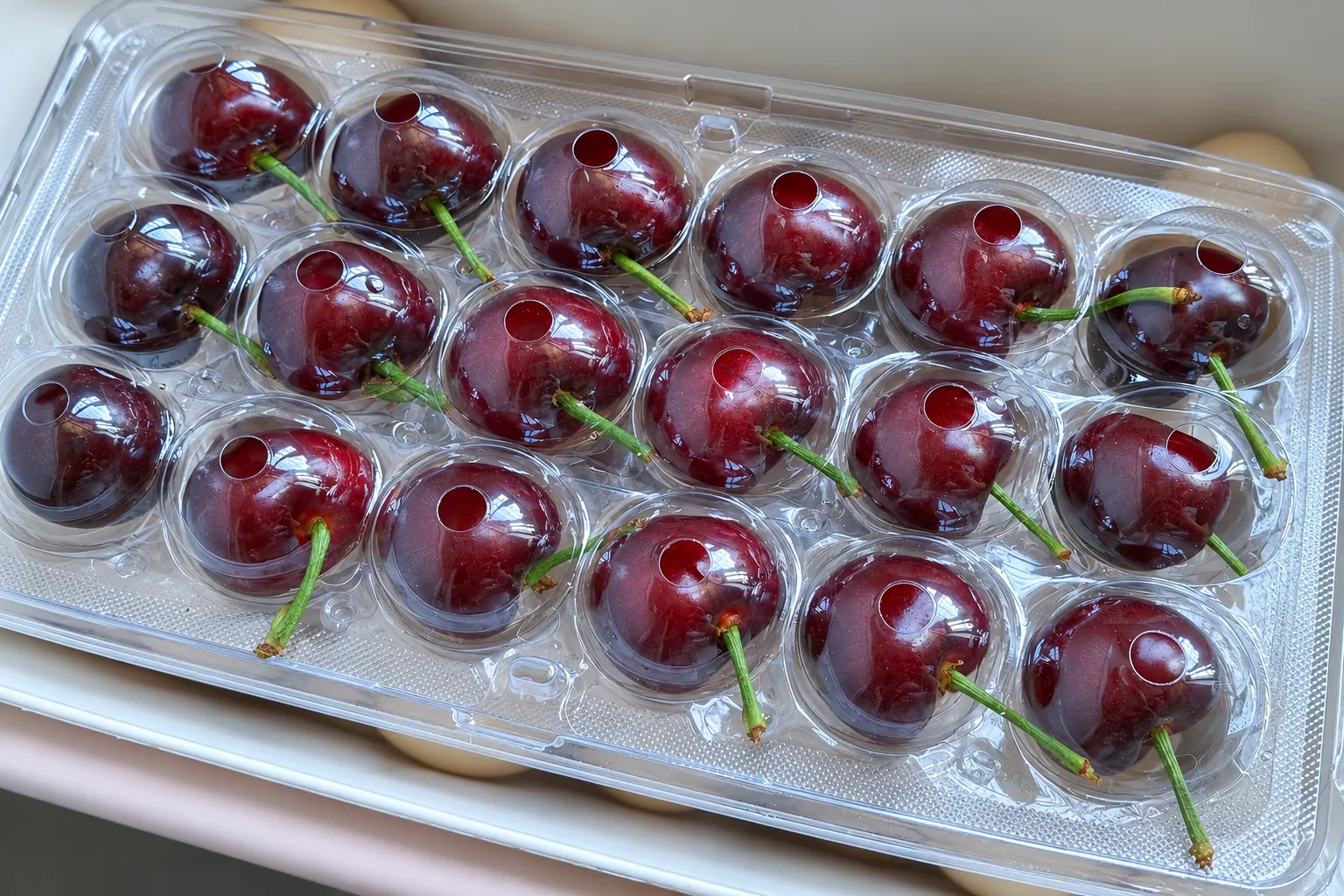

Validate the Complete Pack
Build the final pack on the intended line. Use production samples rather than drawings or hand-built display mockups. Check denesting, fruit loading, closure, sleeve position, barcode scanning, and case packing. Load the declared sale weight and place the retail packaging in the real shipping case and pallet pattern.
Condition and handle the pack for the intended route. Check fruit movement, lid clearance, airflow, moisture response, and paper damage. Record the fruit lot, component versions, test conditions, and decision.
During a line trial, compare packs from the start and end of the run. Check whether sleeve position changes after repeated denesting, loading, closing, and case packing. Record any blocked vent, scuffed print, loose band, split seam, or barcode failure before approval.
Frequently Asked Questions
Can a Paper Sleeve Replace a Plastic Lid?
No. A sleeve may group a tray, but it may not provide the same closure, tamper evidence, or protection from outside contact. Test the actual construction.
Should Paper Touch the Fruit?
Only when the material, ink, coating, adhesive, and manufacturing controls suit the intended use. Check FDA food-contact guidance and obtain supplier documents for the destination market.
Can Plastic and Paper Be Called Recyclable Together?
Only after checking the final materials, separation design, collection system, and local rules. Do not rely on appearance or a broad environmental claim.
Final Decision
Effective thermoformed fruit packaging starts with fruit fit and airflow. Give paper one clear job, control every interface, and approve the assembled pack on the real line and route.
